Tag: Constitutional Reform Commission

  • ‘Constitution still protecting your fundamental rights, freedoms’ – AG

    ‘Constitution still protecting your fundamental rights, freedoms’ – AG

    In-person lectures for the International Human Rights Law Course began on Monday with Attorney General and Minister of Legal Affairs, Mohabir Anil Nandlall delivering the inaugural presentation.

    The course, conceptualised and executed by the Ministry of Parliamentary Affairs and Governance, was launched on 29 July.

    Attorney General and Minister of Legal Affairs, Mohabir Anil Nandlall S.C

    It focuses on several key areas, including Guyana’s human rights framework, the International Bill of Rights, significant legislation protecting human rights in Guyana, freedoms, and contemporary issues in human rights law.

    In his comprehensive presentation, Minister Nandlall reaffirmed support for the country’s constitution and emphasised its vital role in guiding subsidiary legislation.

    He detailed the historical evolution of the Constitution of Guyana, noting that it was based on the Westminster model, which drew from the French Constitution and the Constitution of the United States of America.

    After drafting, this model was adopted by many Caribbean countries, including Guyana.

    “These rights, which are called fundamental rights, are the rights that we have in our constitution…the entire legal system of [our] country centred around the Constitution, and that Constitution became the supreme of the law,” he explained.

    Embedded in this Constitution, the Attorney General said, are rights to protect humans from harm and support the continued evolution of mankind.

    He was adamant that these rights are also defined as fundamental rights.

    “The French Parliament refers to [these rights] in the preface of its Constitution in 1791 as ‘the natural, inalienable, and sacred rights of man’. So that is why these rights are called fundamental rights,” he said.

    The Attorney General posited, “One of the reasons why they are called fundamental rights is because…they cannot be altered by an ordinary process…because [the Constitution] is the supreme law, almost every provision of it is protected, meaning that it cannot be changed by an ordinary majority vote on the floor of the Parliament.”

    Absolutism of Fundamental Human Rights

    Notwithstanding this primary principle, Minister Nandlall was careful to explain that not all fundamental rights are absolute.

    This means that some of these rights are not immovable, or in some way, unchanging no matter the circumstance.

    Instead, they must display a balancing act that creates the environment for fair jurisprudence to take place.

    “You have a right to free speech, but you cannot shout ‘Fire! Fire!’ in a crowded cinema because it will cause mayhem. You have a freedom of movement, but you cannot drive down a one-way street. So all freedoms have restrictions and they have qualifications,” Minister Nandlall detailed while citing several cases to support the position.

    Additionally, the Minister reasserted the fact that rights must not be exercised by individuals at the expense of the public good.

    The same rights and freedoms that the Constitution gives you must be balanced against the rights and freedoms of your neighbour. So, you have a right to play music, but your neighbour has a right to enjoy peace and quiet. So if you play your music to such a decibel so as to affect his quietude, then you have a problem,” Nandlall described.

    Delivering brief remarks, Minister of Parliamentary Affairs and Governance Gail Teixeira underscored the importance of a better understanding of human rights laws by the citizenry.

    According to the minister, the course has been tailored to raise more awareness about the Constitution and its empowering nature.

    “I believe that this session is very important for all members here today to really understand our Constitution and to recognize how it works, and how we can use in the best way to enhance our democratic processes, our structures, our systems, and of course human rights,” she said.

    The International Human Rights Law Course will cover some ten weeks of informative training sessions catering to 195 participants.

    The sessions will be facilitated by several high-level officials well versed in the law and human rights matters, including Chief Justice Roxanne George-Wiltshire and representatives from the Food and Agriculture Organization (FAO).

  • Remaining members of Law, Constitutional Reform Commission sworn in

    Remaining members of Law, Constitutional Reform Commission sworn in

    The remaining members of the Law Reform Commission and Constitutional Reform Commission (CRC) were on Tuesday sworn in with a mandate of taking a ‘forward-thinking’ approach to their work.

    President, Dr Mohamed Irfaan Ali delivered the charge during the simple but significant ceremony at the Office of the President on Shiv Chanderpaul Drive.  

    President Dr Mohamed Irfaan Ali addressing the members of CRC and other special guests Tuesday at the Office of the President

    The newly sworn-in members of the Law Reform Commission are Everton Singh-Lammy and Dr. Marie Correia, while Timothy Jonas, Kamal Ramkarran, and Keoma Griffith are the final three commissioners to complete the 21-member CRC.

    While acknowledging the lasting power of law and constitution as guidelines for governance, the head of state emphasised the need for them to adapt to a changing society.

    He urged the new commissioners to embrace this challenge by evaluating transformative societal changes that promote Guyana’s competitiveness while allowing citizens greater levels of freedom.

    Recognising the complexity of constitutional reform, he stressed the importance of forward-thinking commissioners who can assess these changes within the context of Guyana’s evolving socioeconomic landscape.

    “Members of these commissions…must be very open, must be able to understand the environment in which the country is operating in, the development trajectory of the country, the advancement of the judicial system, the changes [in] policymaking,” President Ali emphasised.

    The president further explained, “I think that given the nature of both commissions, the Law Reform Commission and the Constitutional Reform Commission, it is not only about laws and the legal framework in which things are drafted. The work in both commissions is a representation of the dynamics in our society.”

    President Dr Mohamed Irfaan Ali flanked by Attorney General and Minister of Legal Affairs, Anil Nandlall, SC and newly sworn-in members of the Constitutional Reform Commission

    The president also commended the diverse makeup of both entities, and expressed confidence that these groups will offer fresh and innovative perspectives to address age-old issues.

    “We expect that these young faces will bring the energy and bring that view that is sometimes missing… I think with the type of representation that we see, it also shows that our country is bringing the next generation of important human assets into the frame of decision-making at a very high level,” he added.

    The CRC is chaired by Justice Carl Singh. The government’s representatives are Attorney General, Mohabir Anil Nandlall, SC, Ministers Gail Teixeira, Dr Frank Anthony, Pauline Sukhai, and Kwame McCoy.

    Other commissioners include Vincent Alexander, Sherwood Lowe, Nigel Hughes, Ganesh Mahipaul, and Timothy Jonas (representatives of the APNU/AFC and joinder parties); Attorney Kamal Ramkarran from the Guyana Bar Association; Aslim Singh from the Labour Movement; Derrick John from the National Toshao Council; Ramesh Persaud from the Private Sector; Attorney Kim Kyte-Thomas from the women organisations; Dr Josh Kanhai from the youth organisations; Attorney Keoma Griffith from the Christian organisations; Imran Ally from the Muslim organisations; Radha Krishna Sharma from the Hindu organisations; and Attorney Adrian Anamayah as the farmers’ representative.

    As outlined in the recently assented Constitutional Reform legislation, the CRC is mandated to review the constitution and provide for the current and future rights, duties, liabilities, and obligations of the Guyanese people.

    Meanwhile, the Law Reform Commission is responsible for ensuring that the country’s laws are updated in keeping with global legislative trends.

    Earlier this year, the new Chair of the Law Reform Commission, Emily Dodson took her oath of office, while former Member of Parliament, Lenox Shuman was also sworn in.

    The other Commissioners are Deenawati Panday and Clarissa Riehl, and Teni Housty. They were sworn in on August 11, 2021.

  • Constitutional Reform Commission sworn-in

    Constitutional Reform Commission sworn-in

    President Ali encourages it to ‘approach responsibilities diligently’

    Newly sworn-in commissioners of the Constitutional Reform Commission (CRC) have been encouraged to execute their responsibilities diligently and with dedication, as they take on the arduous task of modernising Guyana’s supreme laws to counter evolving and new challenges.

    A total of 18 commissioners took their oath of office before His Excellency Dr Mohamed Irfaan Ali at the Office of the President on Wednesday, while the remaining commissioners will take the oath at a later date.

    His Excellency Dr Mohamed Irfaan Ali and members of the Constitutional Reform Commission

    The 2022 Constitutional Reform Commission Act has outlined several areas for potential reform, including indigenous peoples’ rights, fundamental rights, children’s rights, eradication of discrimination, enhancement of race relations, and electoral reform, among other areas.

    Offering words of encouragement, President Ali emphasised that these areas of focus are wide-ranging, but not exhaustive of the commission’s scope of work.

    “It is imperative to recognise the weighty mandate entrusted upon you. I ask that you approach your responsibilities with utmost diligence and dedication, striving to foster an atmosphere of cooperation and mutual respect during your deliberations. It is imperative to acknowledge the significance of your work in shaping the future of constitutionalism in Guyana,” the president underscored.

    He continued, “Your ability to work together and achieve consensus will not only advance the cause of constitutional reform but also serve as an encouragement for greater political and social inclusion.

    The nation’s constitution is a framework that guides governance, the allocation of power, the functions of the arm of state, and the rights of citizens, as highlighted by the president.

    While the constitution could serve as a timeless blueprint for governance, reflecting enduring principles and values, the dynamic and evolving nature of society necessitates periodic updates and reform to remain relevant and effective.

    “A constitution must remain a living document, and not become archaic. It must possess the capacity for adaption to be relevant and to effectively address new challenges, societal changes, and emerging issues, while still upholding its core principles and protecting the rights of citizens, address new challenges, [and] emerging issues,” President Ali stated.

    The head of state added that the constitution is designed to embody the collective aspirations of people while safeguarding their rights and empowerment.

    And so, “The constitution must be drafted in clear and accessible language, comprehensible to the average individual. This ensures that all citizens can understand their rights and obligations, thereby facilitating active participation in a democratic process and reinforcing the mutual understanding…,” he underlined.

    Justice Carl Ashok Singh is the chairperson of the CRC

    Justice Carl Ashok Singh is the chairperson of the CRC.

    Attorney General, Mohabir Anil Nandlall, SC, Ministers Gail Teixeira, Dr Frank Anthony, Pauline Sukhai, and Kwame McCoy are the government’s representatives on the commission.

    Other commissioners include Vincent Alexander, Sherwood Lowe, Nigel Hughes, Ganesh Mahipaul, and Timothy Jonas (representatives of the APNU/AFC and joinder parties); Attorney Kamal Ramkarran from the Guyana Bar Association; Aslim Singh from the Labour Movement; Derrick John from the National Toshao Council; Ramesh Persaud from the Private Sector; Attorney Kim Kyte-Thomas from the women organisations; Dr Josh Kanhai from the youth organisations; Attorney Keoma Griffith from the Christian organisations; Imran Ally from the Muslim organisations; Radha Krishna Sharma from the Hindu organisations; and Attorney Adrian Anamayah as the farmers’ representative.

    The commission will review the Constitution of Guyana to provide for the current and future rights, duties, liabilities, and obligations of the Guyanese people.

    It will also implement reforms relating to elections and the Guyana Elections Commission (GECOM), considering its composition, method of electing its chairman and members, and its jurisdiction over the national registration and electoral processes.

    The commission will receive, consider, and evaluate submissions for changes to the constitution, after which these recommendations will be submitted to a standing committee for consideration by the National Assembly. This will be the third constitutional reform process in Guyana.

    Constitutional reform has been long promised by political parties but is now being initiated by the current administration, which was outlined in its 2020-2025 manifesto.

  • Constitutional Reform Commission to be appointed next month – AG Nandlall

    Constitutional Reform Commission to be appointed next month – AG Nandlall

    As part of the government’s commitment to enhancing Guyana’s premier laws, President Dr Mohamed Irfaan Ali will be appointing the 20-member Constitutional Reform Commission in September.

    The Constitutional Reform Act was approved in 2022 and provides for the establishment of the commission, which is expected to lead nationwide engagements on the much-needed process.

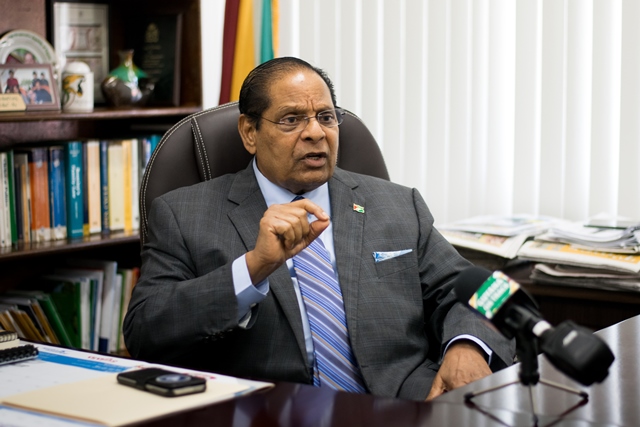
    Attorney General and Minister of Legal Affairs, Anil Nandlall SC

    Attorney General and Minister of Legal Affairs, Mohabir Anil Nandlall, SC, made the revelation during this week’s edition of ‘Issues in the News’ aired Tuesday evening.

    The 20-member commission will be drawn from political parties (five from the ruling party and four from the main opposition and one from the ANUG), while 10 will be drawn from religious groupings, the private sector, the Guyana Bar Association, the National Toshaos Council, the labour movement, women’s organisations as well as nominees representing farmers and youths.

    “It’s not going to be a politically dominated commission. It’s going to be half politicians and half civil society. The work of the commission will be driven by public consultation,” the legal affairs minister emphasised.

    Minister Nandlall said once the commission is in place, a comprehensive consultation process will begin with citizens.

    “Those appointments will be made before the end of September. So, constitutional reform – that important national exercise will soon commence,” he added.

    The commission, according to the act, will review the constitution to provide for the current and future rights, duties, liabilities, and obligations of the Guyanese people. It is mandated for that purpose to receive, consider, and evaluate submissions for the alteration of the constitution, and report its recommendations to the standing committee for transmission to the National Assembly. 

    In conducting the review, the commission will consider the full protection of the fundamental rights of and freedom of Guyanese under the law, the rights of Indigenous people of Guyana, the rights of children, eliminating discrimination in all forms, and improving ethnic relations, while promoting ethnic security and equal opportunity.

    The commission will also, among other things, implement reforms relating to elections and the Guyana Elections Commission (GECOM), taking into consideration its composition, method of electing its chairman and members, and its jurisdiction over national registration and electoral processes.

    Some $150 million was green-lighted in the administration’s fiscal plan towards advancing constitutional reform efforts in 2023.

  • Constitutional Reform Commission to be appointed after elections COI concludes

    Constitutional Reform Commission to be appointed after elections COI concludes

    The 20-member Constitutional Reform Commission will be appointed by President Dr Mohamed Irfaan Ali, after the Commission of Inquiry (COI) into the events surrounding the March 2, 2020 General and Regional Elections has concluded.
    Ministry of Parliamentary Affairs and Governance, Gail Teixeira made the disclosure Wednesday evening as she appeared on a programme streamed on social media.

    “The Constitutional Reform Commission will be up and running as soon as the Commission of Inquiry (COI), which has a limited time, if there are delays like this, going into the courts, it could take longer than was anticipated,”
    Minister Teixeira disclosed.

    Parliamentary Affairs and Governance Minister, Gail Teixeira


    The building that is currently facilitating the elections CoI will be used to house the commission.Early in November, the National Assembly passed the Constitutional Reform Commission Bill 2022 paving the way for the appointment of the commissioners.
    The commission will comprise five members nominated by the government and five members by the opposition. Representatives from the Guyana Bar Association, the labour movement, the National Toshaos’ Council, the private sector, as well as women, youth and religious organisations and farmers will make up the commission.

    It will implement reform relating to elections and the Guyana Elections Commission (GECOM), taking into consideration its composition, method of electing its chairman and members, and its jurisdiction over the national registration and electoral processes.

    Once enacted, it will provide for the commission to receive, consider and evaluate submissions for the changes to the constitution. Those recommendations will then be submitted to a standing committee for consideration by the National Assembly.

    Constitutional reform requires the support of the National Assembly or in some cases, a referendum.

    “Constitutional reform will take place and it will be a national issue,”
    the minster assured.

    This was a commitment made by the PPP/C Administration shortly after it took office, vowing to never a recurrence of the events during the March 2, 2020.

  • CCJ Ruling validates work of Constitutional Reform Commission – PM Nagamootoo

    CCJ Ruling validates work of Constitutional Reform Commission – PM Nagamootoo


    • Ministers Joseph Harmon and Raphael Trotman react

    DPI, Guyana, Tuesday, June 26, 2018

    The Caribbean Court of Justice’s (CCJ) ruling on the presidential term limit case today is especially meaningful for those who served on the Constitutional Reform Commission in the 1990s, Prime Minister Moses Nagamootoo said.

    Reacting to the CCJ’s ruling today, PM Nagamootoo, who is performing the functions of the president, said the ruling validates the work undertaken by the Constitutional Reform Commission.

    The CCJ, in a majority decision, ruled that the amendments to Article 90 of the constitution, to restrict who can become president and how long they can serve, were validly enacted.

    “It means that our constitution is supreme. It means that if the constitution says there are only two terms for a person wanting to be president, then that is the law,” the Prime Minister said.

    PM Nagamootoo noted he was a part of the Commission in 1996. The 1999 Constitutional Reform Commission conducted nationwide consultations to make the Constitution more relevant to citizens’ needs and reduce racial and political tensions.

    Minister of Natural Resources, Raphael Trotman and a party in the appeal of the third term case supported PM Nagamootoo’ s assertions.

    “Today, we are vindicated and today, we know that Parliament and its representatives … have managed to arrest, I believe, a sick attempt to thwart all of those gains and to wash away all of the labours of the last decade and a half,” Minister Trotman said.

    President of the CCJ, Sir Dennis Byron, in his ruling, concluded these constitutional amendments reflected Guyana’s evolving democracy.

    Minister of State, Joseph Harmon, noted the country can now move forward in unity to address issues affecting it as it puts an end to speculations on presidential term limits.

    “It basically says that the interpretation which the courts have given to provisions in our constitution are important it also reinforces the fact that citizens of this country can utilise the judicial process to get an outcome,” Minister Harmon noted.

    By: Tiffny Rhodius.

    Images: Keno George and Jameel Mohamed.

  • Gov’t to reduce use of pre-trial detention for minor crimes

    Gov’t to reduce use of pre-trial detention for minor crimes

    GINA, GUYANA, Tuesday, November 29, 2016

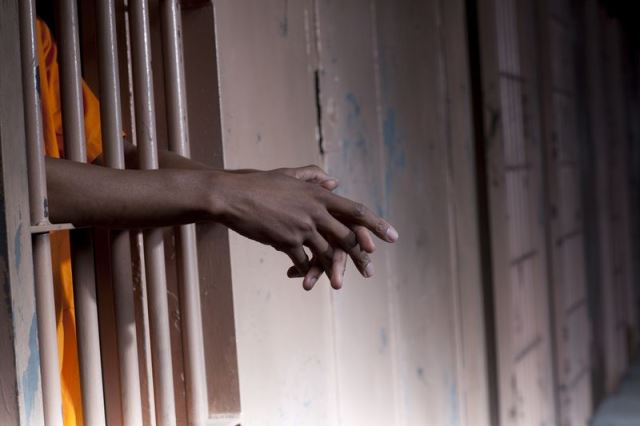
    The government will review its pre-trial detention policies and push for alternative sentencing as it works towards reforming the justice sector in the coming year.

    Minister of Finance Winston Jordan, during his 2017 budget presentation on Monday in the National Assembly, said that the government will reduce the burden on the prison system  by  implementing  a  comprehensive  institutional  strengthening  programme aimed at influencing the use of penal and rehabilitation policy and law.  This will be done through the “Support for Criminal Justice System Programme”, Minister Jordan pointed out.

    shutterstock_50524789“Ultimately, we intend  to  reduce  the  use of  pre-trial  detention  for  persons  accused  of  minor,  non- violent, offences by aggressively promoting the use of alternative sentencing options such as probation, community service, restitution, and fines,” Minister Jordan explained.

    The strengthening of the legislative framework is also being done to enhance capacity to prevent money laundering and arrest the financing of terrorism. “To this end, the Government has embarked on a tailored technical cooperation programme aimed at formally assessing the money laundering and terrorist financing risks,” Minister Jordan noted.

    While Guyana, was cleared from the Financial Action Task Force (FATF) watch list in October in this regard, the government must prove its effectiveness in being able to convict those who launder money and pilfer state assets if it is to remain off the watch list. The capacity of the judicial system will have to be developed in order to meet this requirement.

    “The Government continues to place the highest priority on the maintenance of a strong justice system, given its role in upholding our civil liberties and maintaining the rule of law,” Minister Jordan said.

    Additionally, the government pledged to work assiduously in the area of constitutional reform. “An administrative secretariat will be established to manage the reform process and support the consultations,” Minister Jordan stated.

    Minister Jordan said that in 2017 consultations across the 10 administrative regions will be done by the Constitutional Reform Commission. The consultations are expected to last for two years with over 100 communities being engaged in the process for which $80M has been allocated.


    By Tiffny Rhodius